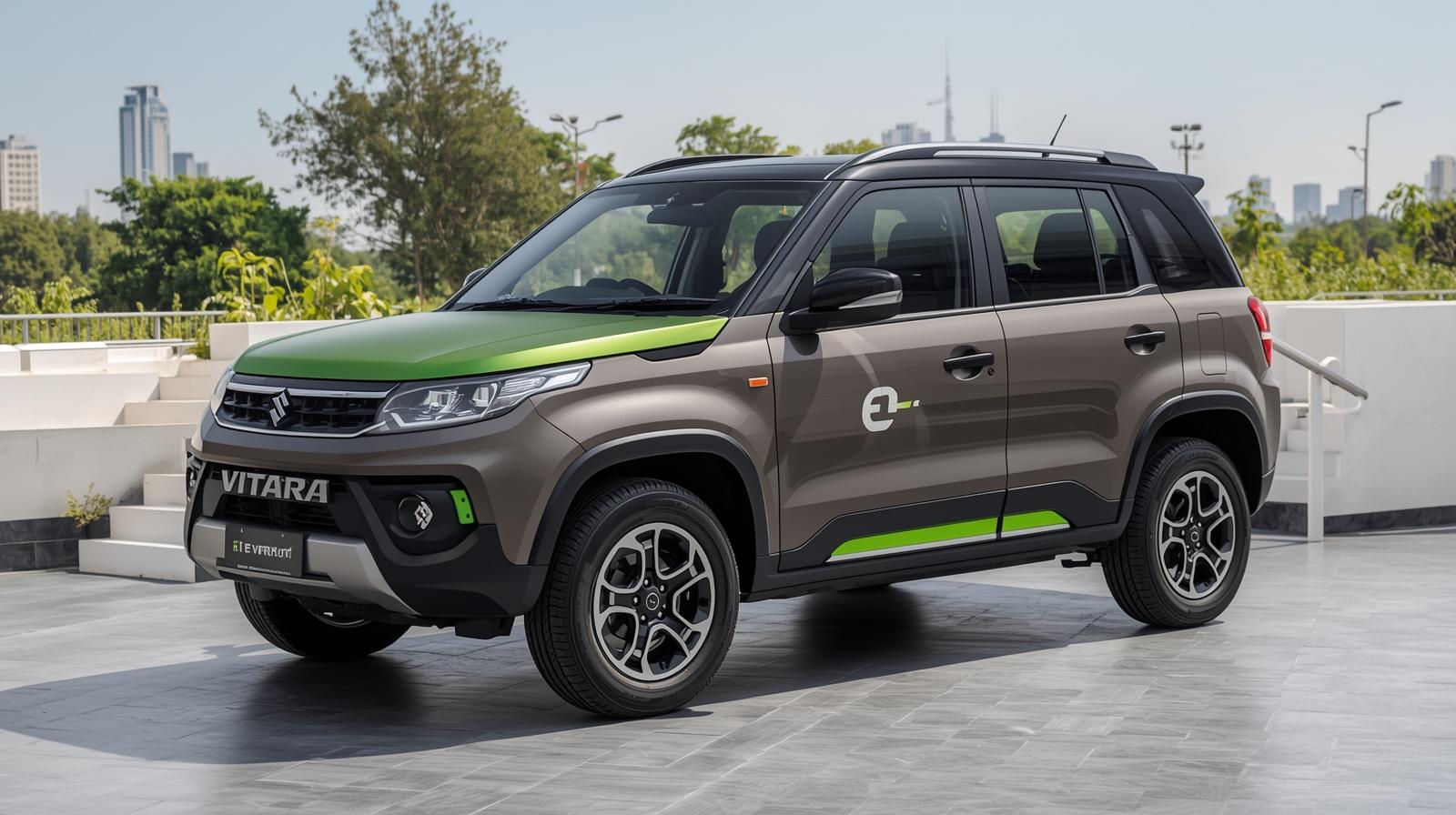
The Indian automotive market is witnessing a massive shift toward electric vehicles (EVs), and Maruti Suzuki, India’s largest carmaker, is finally stepping into the electric SUV segment. The Maruti e-Vitara, the company’s first electric SUV, is generating huge buzz among EV enthusiasts and family SUV buyers alike. With rising fuel prices, growing environmental awareness, and government incentives, the timing couldn’t be better for Maruti to launch its first mass-market EV.
The e-Vitara aims to combine the practicality, reliability, and affordability Maruti is known for, while offering a modern electric powertrain and futuristic technology. Let’s explore everything we know so far about this highly anticipated electric SUV — from design and performance to features, safety, range, and launch expectations.
🔷 Design and Exterior — Futuristic Yet Familiar
Maruti’s approach to the e-Vitara seems to blend a familiar SUV look with modern EV cues. While the exact details are still under wraps, spy shots and reports suggest a striking, urban-friendly design.
Front Fascia:
- A closed-off grille, common in EVs, is likely to replace the traditional radiator grille. This improves aerodynamics and gives a futuristic appearance.
- Sleek LED headlights with daytime running lights (DRLs) are expected, emphasizing a premium look.
- The bumper design is anticipated to feature aerodynamic lines and integrated fog lamps.
Side Profile:
- The SUV will likely maintain a compact, muscular stance similar to the existing Vitara Brezza but slightly longer to accommodate the EV battery pack.
- Aerodynamic alloy wheels designed to reduce drag could be offered in higher trims.
- Blacked-out pillars and roof rails may provide a floating roof effect.
Rear End:
- LED tail lamps, possibly connected by a light bar, give a modern touch.
- Rear bumper redesign and diffuser styling may hint at the EV identity.
- A dedicated charging port will likely be located on the side, subtly integrated into the bodywork.
Overall, the e-Vitara promises a blend of familiar SUV aesthetics with subtle electric-age styling, making it appealing for both traditional SUV buyers and new-age EV customers.
🔷 Interior and Cabin — Modern, Comfortable, and Connected
Step inside, and Maruti appears to have focused on creating a premium-feeling EV cabin that doesn’t compromise on space or comfort.
Dashboard and Layout:
- A clean, minimalistic dashboard with soft-touch materials and metallic accents is expected.
- A floating touchscreen infotainment system will likely be standard, possibly 10–12 inches, supporting wireless Android Auto and Apple CarPlay.
- Digital instrument cluster will display real-time EV metrics such as battery state, range, and energy consumption.
Comfort and Convenience Features:
- Dual-zone automatic climate control is expected to maintain cabin comfort, especially since electric vehicles can generate less heat than conventional engines.
- Spacious seating with supportive cushions, adjustable headrests, and reclining options for rear passengers.
- A multifunction steering wheel, wireless charging pad, and ample storage spaces throughout the cabin.
Family-Friendly Features:
- Rear AC vents and USB charging ports for all three rows, making it suitable for long trips.
- Folding rear seats to expand cargo space when needed.
- Optional panoramic sunroof in higher trims for a more premium feel.
Maruti’s goal with the e-Vitara interior seems clear: combine EV technology with everyday usability and comfort, making it practical for Indian families.
🔷 Performance and Powertrain — Efficient, Smooth, and Eco-Friendly
The e-Vitara is set to feature Maruti’s first electric powertrain for mass-market SUVs in India. Early reports suggest a focus on efficiency and usability rather than raw performance, aligning with Maruti’s brand philosophy.
Battery and Motor:
- A lithium-ion battery pack, likely ranging between 40–50 kWh, is expected to power the SUV.
- Electric motor output is rumored to deliver ~150 bhp with torque exceeding 250 Nm, providing quick acceleration from a standstill — typical for EVs.
- Front-wheel-drive is expected, with potential AWD variants in the future.
Range and Charging:
- Expected driving range on a full charge: 350–450 km depending on conditions and battery size.
- Fast charging capability: 0–80% in ~50 minutes using a DC fast charger.
- Standard AC home charging will take longer, approximately 6–8 hours, suitable for overnight charging.
Drive and Handling:
- Electric SUVs usually have lower centers of gravity due to the battery placement; the e-Vitara will likely have improved stability and cornering.
- Suspension tuning will balance ride comfort with dynamic handling, ideal for both city driving and highway cruising.
- Regenerative braking systems may allow for energy recovery, enhancing range during stop-and-go traffic.
With these specs, the e-Vitara aims to deliver smooth, silent, and eco-friendly driving while keeping ownership costs lower than traditional petrol or diesel SUVs.
🔷 Safety Features — EVs Bring Extra Attention to Safety
Safety is a critical factor for electric SUVs, and the e-Vitara is expected to come loaded with features:
- Airbags: Standard dual front airbags, with side and curtain airbags in higher trims.
- Electronic Stability Program (ESP): Helps maintain control in slippery or emergency conditions.
- Hill-Hold Assist & Traction Control: Essential for urban stop-start and highway inclines.
- ADAS (Advanced Driver Assistance Systems): Reports suggest top trims may get lane departure warning, forward collision warning, and automatic emergency braking.
- Regenerative Braking Modes: Provides an extra layer of safety while helping improve energy efficiency.
Maruti seems committed to ensuring that its first EV SUV is as safe, if not safer, than conventional SUVs in the same segment.
🔷 Features and Technology — Smart, Connected, and Practical
As an EV, the e-Vitara is expected to introduce several new-age technology features:
- Smart infotainment: Likely with AI-based voice control, connected car features, and real-time charging station navigation.
- Digital cluster & EV metrics: Real-time energy consumption, range prediction, and regenerative braking feedback.
- Remote app control: Start/stop charging, pre-condition cabin temperature, track location, and check vehicle health via a mobile app.
- Advanced lighting: LED headlamps and DRLs, automatic high beam assist, and adaptive fog lamps.
Maruti’s approach seems focused on delivering high-tech features without overwhelming the user, keeping usability simple yet smart.
🔷 Expected Variants and Pricing
While the official variants haven’t been revealed, speculation points toward multiple trims, each adding incremental features, battery capacity, and luxury elements.
Base Variant:
- Standard EV powertrain, essential safety features, smaller touchscreen, no ADAS.
Mid Variant:
- Larger battery, upgraded infotainment, rear AC vents, partial ADAS features.
Top Variant:
- Maximum range, panoramic sunroof, full ADAS, digital cluster, premium interior finishes, and larger infotainment system.
Expected Price Range (Ex-Showroom India):
- Base variant: ₹14–16 lakh
- Mid variant: ₹17–19 lakh
- Top variant: ₹20–23 lakh
If Maruti can price the e-Vitara competitively, it could directly compete with Tata Nexon EV, MG ZS EV, Hyundai Kona EV, and other premium compact electric SUVs.
🔷 Why the Maruti e-Vitara Matters for India
- Mass EV Adoption: Maruti’s entry into EVs can accelerate electric vehicle adoption in India due to its strong brand trust and service network.
- Affordability: Expect the e-Vitara to be cheaper than many competitors, offering a cost-effective EV solution for families.
- Urban Utility: Compact size combined with 5–7 seats (depending on variant) makes it ideal for urban and semi-urban Indian roads.
- Low Maintenance: EVs generally have lower maintenance requirements compared to ICE (internal combustion engine) vehicles.
For buyers looking to switch to electric without sacrificing Maruti’s reliability or after-sales service, the e-Vitara could be a game-changer.
🔷 Pros & Cons — What Buyers Should Consider
Pros:
- First mass-market EV SUV from Maruti.
- Likely competitive pricing and running cost.
- Modern design, connected tech, and family-friendly interior.
- Maruti’s extensive service network ensures reliability.
- Eco-friendly, zero-emission driving.
Cons:
- Third-party charging infrastructure may still be limited in smaller cities.
- Limited AWD or long-range variants initially.
- New technology may take time for Maruti’s network to fully support.
- Range and performance may vary in hot or hilly regions.
Video
🔷 Launch Timeline & Expectations
- Testing: Prototypes are already spotted on Indian roads.
- Expected Launch: Likely mid to late 2025.
- Production: Maruti may produce the e-Vitara at the Gujarat or Haryana plant.
- Bookings: Could open shortly after the official launch announcement, with deliveries starting within a few months.
Given Maruti’s market influence, a well-timed launch with pre-booking options could lead to strong sales from day one.
🔷 Final Thoughts
The Maruti e-Vitara marks a significant step for India’s largest carmaker into the electric future. It combines Maruti’s trusted reliability, low running costs, and user-friendly design with modern EV technology, safety, and smart features.
For families, urban commuters, and early EV adopters, the e-Vitara offers:
- Practical electric SUV with usable range.
- Affordable entry point into the EV segment.
- Family-friendly design with comfort and tech.
- Trusted Maruti after-sales network ensuring peace of mind.
As the Indian EV market grows, the e-Vitara could be the vehicle that makes EVs mainstream in the country. With launch expected soon, it’s an exciting time for buyers looking to experience Maruti’s first electric SUV — efficient, modern, and family-ready.