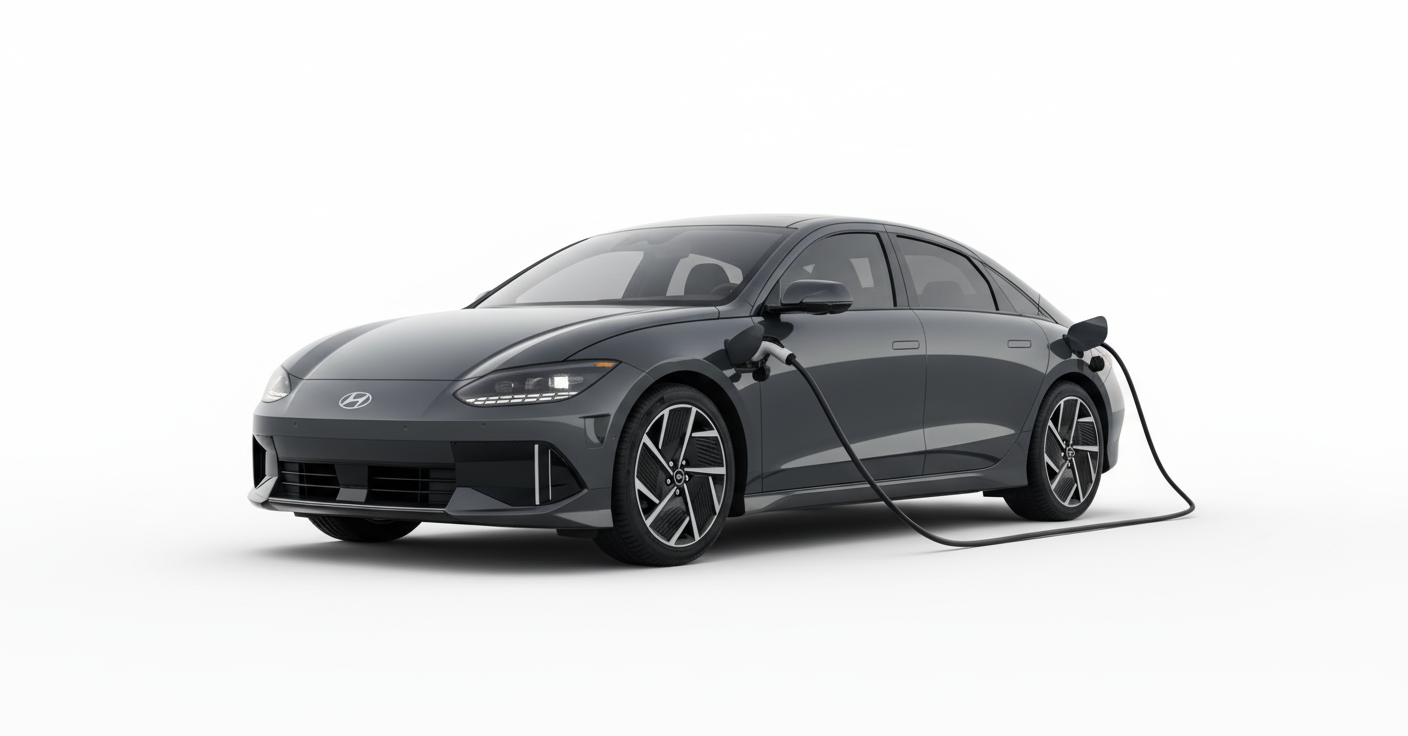
The electric sedan space in India is about to get exciting. Hyundai is preparing to introduce its IONIQ 6 in India, promising to bring sleek design, long range, fast charging, and a premium electric experience. Rumors suggest a WLTP range of ~614 km in select versions, advanced charging capabilities, and a launch price in the ₹55–60 lakh (ex-showroom) band.
If delivered well, the IONIQ 6 could become a benchmark “executive EV sedan” in India — going head to head against premium SUVs, crossover EVs, and possibly making buyers consider a sedan over an SUV for EV duty.
Here’s a deep dive into what to expect from the Hyundai IONIQ 6 in India — its design, specs, features, launch timing, and how the financing might work.
1. Global Overview & Indian Prospects
The IONIQ 6 is built on Hyundai’s E-GMP (Electric-Global Modular Platform), the same underpinnings used by the IONIQ 5 and other next-gen Hyundai / Kia EVs. (Wikipedia)
Globally, there are multiple battery / drivetrain versions — from single motor, rear-wheel drive to dual-motor AWD setups. (CarLelo)
Across markets, Hyundai advertises that the IONIQ 6 can deliver over 600 km (WLTP) in some configurations. For example, the 77.4 kWh battery variant claims such range. (Wikipedia)
Given this global positioning, the India variant is expected to focus on mid-to-long range trims (e.g. 77 kWh versions) rather than entry-level ones, to justify the premium price in this market.
2. Design, Aerodynamics & Exterior Styling
One of the standout features of the IONIQ 6 is its streamlined, aerodynamic design — Hyundai refers to it as the “Electrified Streamliner.” (Wikipedia)
Key design highlights include:
- Low drag coefficient: extremely streamlined body, with flush door handles and smooth surfaces.
- Sloping fastback roofline: gives it a sedan-coupe appearance while retaining four doors.
- Parametric pixel LED lighting: both front and rear lighting adopt Hyundai’s pixelated light signature.
- Closed front fascia elements (for aerodynamic efficiency) in place of traditional grilles.
- Sculpted body lines and wheel arch geometry optimized for airflow.
These visual features aren’t just for looks — they help reduce aerodynamic drag and improve range, critical for a long-distance EV.
3. Battery, Range & Charging
The battery and charging setup is one of the most crucial parts of any EV, and IONIQ 6’s positioning suggests Hyundai will emphasize strong specs here.
Battery & Range
- The larger 77.4 kWh battery variant globally is claimed to deliver ~614 km WLTP range in favorable conditions. (Wikipedia)
- In more realistic mixed driving, expect the effective Indian range to be somewhat lower (say 450–550 km), depending on conditions, speed, and load.
- Smaller battery / entry models will likely be skipped in India for the initial launch to maintain “premium” appeal.
Charging
- Supports fast DC charging: globally, the IONIQ 6 claims up to ~233 kW DC charging capability (for rapid 10–80% top-ups) in certain trims. (Wikipedia)
- AC / home charging capability (on-board charger) is typically 11 kW in many E-GMP models. (Wikipedia)
- With fast charging, Hyundai suggests that short stops can significantly extend usable range, making the IONIQ 6 more viable for highway trips.
For India, Hyundai must ensure compatibility with existing DC charging networks (e.g., DC 50 kW / 100 kW / 150 kW) to maximize usability.
4. Performance & Drivetrain
Performance will depend on which variant Hyundai brings to India, but from global models:
- Single-motor RWD versions produce ~149 hp (111 kW) in base form and up to ~225 hp (168 kW) in long-range trims. (Car and Driver)
- The dual-motor AWD setup yields up to 320 hp (239 kW) with high torque output in performance versions. (CarLelo)
- 0–100 km/h acceleration for the stronger AWD setup is claimed around 5.1 seconds in global versions. (Wikipedia)
In India, Hyundai may prioritize single-motor long-range trims for cost optimization, but could also bring the AWD / performance trims later.
5. Interior, Comfort & Features
Hyundai is expected to equip the IONIQ 6 with a premium cabin and feature-rich layout.
Cabin Layout & Design
- Dual 12.3-inch displays: digital cluster + central infotainment (commonly used in E-GMP vehicles) (Hyundai)
- Minimalist design with a bridge console and open space concept common in Hyundai’s EV design direction. (Wikipedia)
- Eco-friendly materials: use of recycled fabrics, vegan leather, and other sustainable upholstery choices. (Hyundai)
- Panoramic sunroof or glass roof option for premium variants (depending on regional version).
- Comfortable seating with possibly ventilated and heated options in higher trims.
- Ambient lighting, wireless charging, multiple USB-C ports.
The overall aim is a calm, tech-forward, comfortable interior befitting a flagship EV sedan.
6. Safety & Driver Assistance Systems
Hyundai is likely to equip IONIQ 6 with advanced safety systems and ADAS to appeal to premium buyers.
Expected features:
- Multiple airbags (front, side, curtain)
- Electronic Stability Control (ESC), Traction Control
- Forward collision warning & automatic emergency braking
- Lane-keeping assist, lane departure warning
- Blind-spot monitoring, rear cross-traffic alert
- Adaptive cruise control / highway driving assist
- 360-degree camera or surround-view monitor
- High strength chassis, structural reinforcements for crash safety
Given Hyundai’s global safety credentials and E-GMP usage, the IONIQ 6 will likely aim for top-tier crash test ratings.
7. Pricing, Variants & EMI Calculator
Expected Price Range
To compete in India’s premium EV market, IONIQ 6 is rumored to cost between ₹55 lakh to ₹60 lakh (ex-showroom). Some sources suggest similar pricing expectations. (HT Auto)
This places it squarely above most compact EVs, but below ultra-luxury EV sedans that command extreme premiums.
Variants
Likely tiering:
- Base / long-range single motor variant
- Mid variant with more range or comfort features
- Top AWD / dual motor / performance variant
Hyundai may launch only one or two trims initially, with more variants following.
EMI Estimate
Here’s a sample EMI scenario:
| Loan Amount | Interest Rate | Tenure | Estimated EMI |
|---|---|---|---|
| ₹50 lakh | 9% p.a. | 5 years | ~₹1,02,500/month |
| ₹45 lakh | 9% p.a. | 5 years | ~₹92,300/month |
| ₹40 lakh | 9% p.a. | 5 years | ~₹82,100/month |
These EMIs assume a significant down payment (e.g. 20–25%), to reduce the financed amount.
For many buyers, total cost of ownership — including electricity, maintenance, and depreciation — will be a key consideration when comparing with petrol/diesel alternatives.
8. India Launch Timeline & Strategy
Hyundai is likely to unveil the IONIQ 6 in India by late 2025, with deliveries starting in early 2026.
Key strategies Hyundai may use:
- Launch in metro cities first (Delhi, Mumbai, Bangalore, Hyderabad) with strong charging infrastructure
- Tie-ups with charging network providers (fast DC charging)
- Limited introductory variants to build brand appeal
- Showroom experience with VR/digital displays explaining EV range, charging, etc.
- Offer service and parts support ready from day one
Successful positioning will depend not just on specs, but on how well Hyundai educates Indian EV buyers about long-distance usability, charging convenience, and total cost savings.
9. Strengths & Challenges in Indian Market
Strengths
- Distinctive design and aerodynamic sedan form
- Long-range battery options suitable for Indian conditions
- Strong brand trust and service network of Hyundai
- Feature-rich interior and safety/ADAS systems
- High perceived value vs imported EV sedans
Challenges
- High import duties or local assembly costs making final price steep
- Ensuring charging infrastructure compatibility across India
- Educating buyers to prefer a sedan over crossovers in EV space
- Battery degradation, service support, and resale value concerns
- Competition from SUVs and crossovers which dominate Indian buyer preference
How Hyundai mitigates these challenges will determine IONIQ 6’s success.
10. Why the IONIQ 6 Is a Bold Move
The IONIQ 6 holds significance in Hyundai’s EV roadmap for India:
- It fills a niche: premium electric sedan segment, which is currently underserved.
- It enhances Hyundai’s EV brand image beyond just compact EVs.
- It demonstrates global-level EV capability for Indian buyers.
- It leverages the E-GMP platform’s modular strength for future models.
For buyers who want EV performance in a stylish, aerodynamic sedan, the IONIQ 6 might become the reference.
Conclusion
The Hyundai IONIQ 6 Electric Sedan entering India is an exciting prospect. With rumored specs like ~614 km range, fast DC charging, and premium features, Hyundai is aiming high. A launch price in the range of ₹55–60 lakh indicates this won’t be a mass EV — but a flagship that can push boundaries.
If Hyundai delivers on charging infrastructure, service support, and real-world usability, the IONIQ 6 could reshape luxury EV expectations in India. For buyers ready to step into a futuristic electric sedan experience, this could be the one to watch.